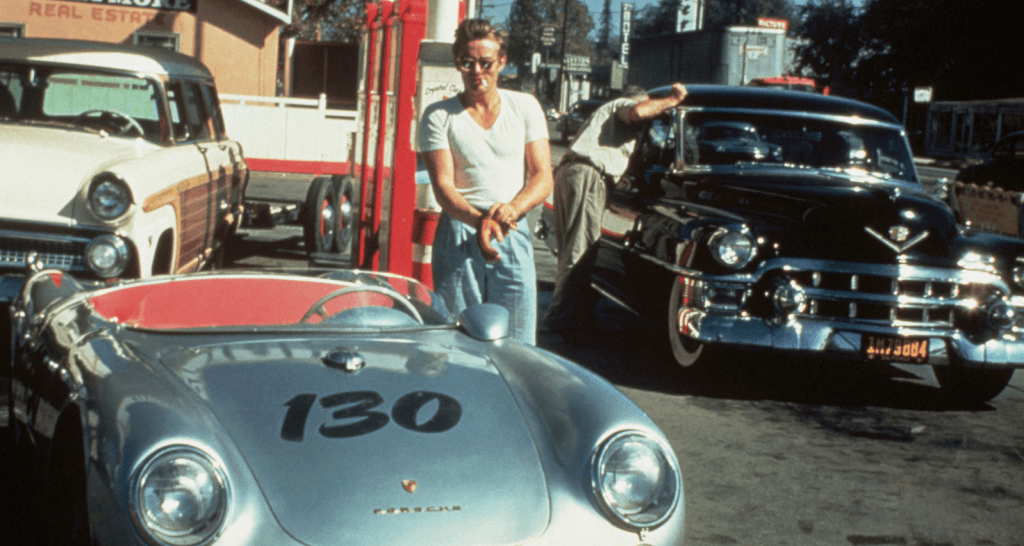
James Dean’s cursed Porsche.
Czytaj dalej →
11.08.2025
The history of the Range Rover brand dates back to the 1960s, when Land Rover engineers began working on a vehicle concept that would combine the driving comfort known from passenger cars with the off-road qualities of the classic Land Rover Series models. At the time, the automotive market was dominated by vehicles with a clearly defined purpose – luxury limousines were unable to cope beyond the asphalt, while off-road cars lacked the comforts that more demanding customers expected.
The need to create a car that is versatile, comfortable and capable of driving in rough terrain became the impetus for the birth of a new automotive segment. The project was code-named “Velar,” and the goal was to build a vehicle that would perform well both in the wilderness and in everyday city driving. The innovation of this approach quickly attracted the attention of the industry, and engineers were faced with the challenge of creating a vehicle that did not yet have an equivalent on the market. One step in this process was the Land Rover prototype, which gave birth to a concept that combined comfort and off-road capability.
In 1970, the automotive world got its first glimpse of the Range Rover, a car that completely changed the perception of off-road vehicles. The first generation Range Rover, later known as the Range Rover Classic, debuted as a three-door body style with simple but modern body lines and an unprecedented combination of functionality and comfort. The car was equipped with permanent four-wheel drive and coilover suspension, which provided excellent handling characteristics both off-road and on paved roads. The vehicle had a synchronized transmission, which was a novelty in this type of design.
The interior, although austere by today’s standards, was designed with the comfort of the driver and passengers in mind. The car quickly gained recognition for its exceptional versatility – it performed equally well as a family car and in tough off-road conditions. The media praised the Range Rover for its groundbreaking technology and functionality, which translated into its growing popularity and cult status in the first years of production. It was the first SUV to combine comfort and off-road capabilities so successfully, setting new boundaries for the off-road car standard.

In the decades that followed, the Range Rover underwent a number of significant changes that solidified its position as Range Rover’s flagship model and luxury SUV. The 1980s brought the debut of a mass-produced four-door model, which significantly increased the vehicle’s functionality and appeal to families and business customers. An automatic transmission, a more refined interior and new equipment versions were also introduced, successively moving the Range Rover toward the premium segment.
At the same time, the sporting side of the model also developed – Range Rovers took part in demanding off-road rallies, including the prestigious Paris-Dakar Rally, proving their capabilities in the most extreme conditions. The brand gained recognition not only as a comfortable luxury vehicle, but also as a reliable off-road car with real off-road capabilities. This image earned the Range Rover a loyal customer base both in Europe and in global markets. At the same time, Land Rover’s position as a manufacturer of versatile SUVs with a solid reputation was being strengthened. Specialized versions also appeared, including a series of armored Range Rovers used by the secret services and diplomats.
In 1994, the second generation of Range Rover cars was unveiled, designated P38A. The car gained more rounded body shapes and an even richer interior, full of leather, wood and modern systems. The introduction of new electronics and extensive personalization options made the Range Rover look more and more like a luxury limousine than a crude off-road car. The changes were met with mixed reviews, but sales remained strong.
_4.0_SE_wagon_05.jpg)
Another important chapter began in 2002 with the launch of the Range Rover III L322. The German company BMW had a significant impact on the build quality, engines and suspension. The vehicle’s interior underwent a revolution – digital clocks, extensive multimedia systems appeared, and the level of luxury reached a new ceiling. The third generation of the car became a symbol of prestige, while not losing its off-road qualities. In the following years, the model underwent numerous upgrades that kept it at the top of the luxury SUV segment.
The Range Rover generation (L405), unveiled in 2012, introduced a design based on a lightweight aluminum body, which significantly reduced the vehicle’s weight and improved its performance and driving economy. The car offered an even more refined interior, as well as advanced driver assistance systems such as adaptive suspension, camera systems and parking sensors.
At the same time, the newly introduced Range Rover Sport – a more dynamic and sportier version of the basic model – was being developed. The RR Sport gained a lower suspension, a more aggressive silhouette and higher performance engines, targeting customers looking for a combination of luxury and excitement behind the wheel. In 2013, the second-generation Sport debuted, bringing even more driving and dynamic capabilities. Both models established Range Rover as a brand offering the highest level of comfort, prestige and modern technology in the SUV segment.
.jpg)
Responding to the changing needs of the market, Range Rover has decided to further expand within its model lineup. In 2011, it debuted the Range Rover Evoque, a compact SUV that won the hearts of younger customers with its modern styling, compact size and wide range of personalization. The Range Rover Evoque was produced in many variants, including a convertible version, making it unique in its class.

The next step was the introduction of the Range Rover Velar in 2017, a model positioned between the large Range Rover and the Sport. The Velar impressed with its futuristic interior, minimalist design and advanced technological solutions. With this, the brand built a complete range of SUVs, responding to diverse customer expectations and strengthening its position in the premium segment. The Evoque has also become one of the most important models in the Range Rover family, attracting a new generation of drivers.

Since its inception, Range Rover has placed great emphasis on technological innovation. One of the most recognizable developments is the center differential and Terrain Response system, which automatically adjusts the vehicle’s settings to the type of road surface. Subsequent vehicle generations have introduced increasingly advanced versions of this system, enabling even safer driving in the toughest off-road conditions.
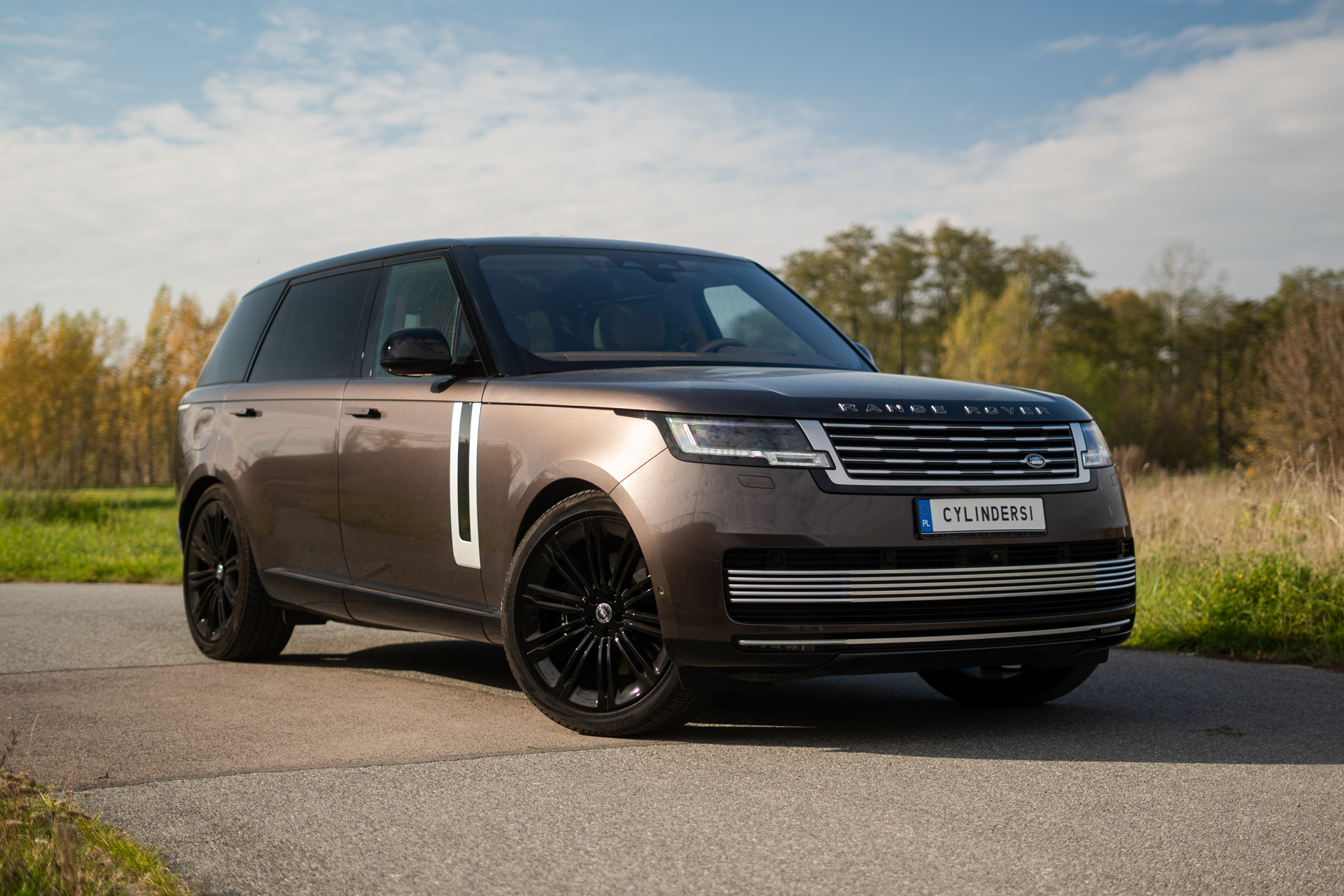
The brand is also actively investing in the development of hybrid powertrains and the electrification of the entire model range. Plug-in hybrid (PHEV) versions are available, and all-electric model launches have also been announced. Today’s Range Rover presents the highest level of technological sophistication – offering integrated multimedia systems, voice control, the ability to remotely manage vehicle functions via mobile apps, and advanced safety systems. Some versions are also equipped with a four-cylinder engine, combining power with fuel efficiency.
The Range Rover has served as an icon of style and prestige for decades. Its presence in movies, TV series and music videos attests to its popularity in pop culture. It has become a favorite means of transportation for many movie, music and sports stars, as well as politicians and members of royal families. It continually appears on lists of the world’s most desirable luxury cars.
With its recognizable silhouette, elegant interior and exceptional reputation, the Range Rover symbolizes social status and professional success. It is associated with a sophisticated lifestyle, and its purchase is seen not only as a choice of transportation, but also as an expression of aspiration and personal prestige, being today the status of a benchmark luxury SUV.
The history of the Range Rover brand is also a story of ownership changes. Initially, the model was part of Leyland Motors, and later belonged to the British Motor Corporation. In the 1990s, the brand was managed by BMW, which resulted in modernization and the implementation of new technologies. This was followed by continued investment in the development of the model range and quality improvements under the American Ford corporation.
In 2008 Land Rover, along with Jaguar, was acquired by the Indian conglomerate Tata Motors. Under the new management, the brand gained full operational independence and strong financial backing, enabling it to grow rapidly. The Indian conglomerate effectively leveraged Range Rover’s British tradition and heritage, while investing in new technologies and global expansion. The acquisition was another important step in Land Rover’s history.
Range Rover is constantly looking to the future as it prepares for its transformation to electromobility and sustainability. The brand has announced that by the end of this decade, all new models will be offered in fully electric or hybrid versions. The goal is to achieve carbon neutrality throughout the vehicle production and operation chain.
The new Range model will feature even more advanced autonomous driving systems, digital user experience and intelligent energy management. At the same time, the brand remains true to its roots – it will continue to offer Land Rover cars that combine luxury with true off-road capabilities. This gives Range Rover a chance to not only maintain, but also strengthen its position as a leader in the luxury SUV segment in the new automotive era.
In the early years of production, the Range Rover was offered in just a few distinctive colors, which are still considered iconic today. Among the most recognizable are Davos White, Bahama Gold and Tuscan Blue. These colors not only emphasized the off-road nature of the vehicle, but also set it apart from the competition and were in keeping with the styling of the 1970s.
The decision to use these colors was made at a time when Charles Spencer King, Rover’s chief engineer, was overseeing the final stages of preparation for the model’s launch. Since the Range Rover was to be more than just another off-road vehicle – it was to offer comfort and prestige – the colors had to match the new design approach.
In later years, special editions were also created, such as the Range Rover Fifty, which referenced the old colors and styling of the classic models, including the original paint schemes. Their production was strictly limited and aimed at collectors and lovers of Land Rover history.
Although the Range Rover pioneered the luxury SUV segment, its creators were also inspired by rival American Jeep, which had been gaining popularity since the 1940s as a vehicle with an off-road pedigree. Land Rover engineers, however, wanted to create something more refined that could successfully compete with the Mercedes S-Class in terms of comfort, while retaining off-road qualities.
Prior to the start of series production, a Velar concept model was unveiled, which hid the true identity of the future Range Rover. The vehicle was not displayed in official materials, and its testing took place away from the eyes of the public. The official presentation of the first model took place in 1970 at the British Motor Show, where it received great interest from the press and customers.
With the success of the classic Range Rover, Land Rover families began to grow. More models were introduced, such as the Land Rover Discovery, which bridged the gap between the luxury of the Range Rover and the functionality of the Defender. Later, the Discovery III model, known for its modern suspension and technology, also appeared, continuing the brand’s line of mid-range SUVs.
Early examples of the Range Rover were powered by Rover units – the 3.5-liter Rover V8 engine used was a modification of the American Buick design, adapted to European road conditions. In the transmission system, the drivetrain corresponded to the Rover engine and worked in conjunction with a reducer and permanent four-wheel drive for exceptional off-road performance.
One of the more groundbreaking moments was the presentation of a model called the Land Rover LRX, a compact concept that gave rise to the later Evoque. The LRX showed how ready the brand was to open up to modern design and new customer groups. The idea was supported by Rover’s technical director, who pointed out the need to modernize its offerings and better match urbanization trends.
Over the years, Land Rover has become a symbol of British engineering and prestige. As the most representative model, the Range Rover has not only survived the decades, but also defined the premium SUV market. Today, it is an integral part of the Range Rover family, maintaining its high status thanks to the constant investment in technology and quality that goes into the design of the new Range Rover.