James Dean’s cursed Porsche.
Czytaj dalej →
13.08.2025
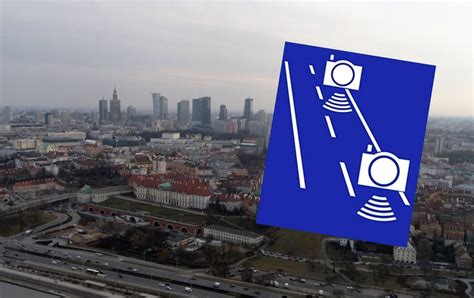
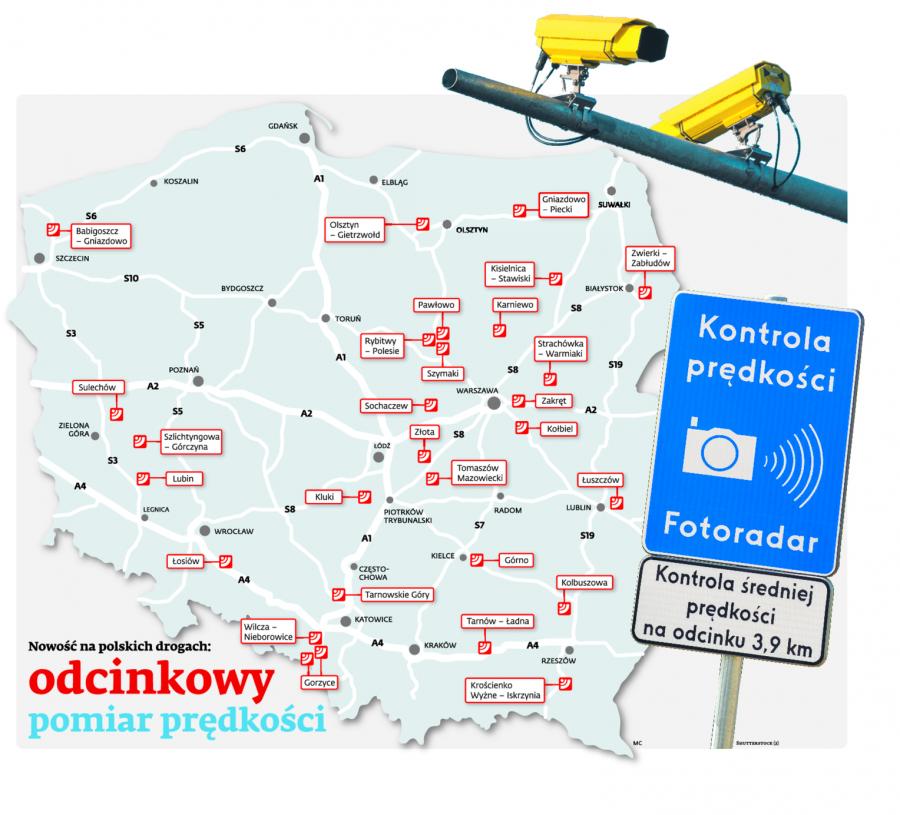
Sectional speed measurement is a system that controls the average speed of a vehicle on a specific stretch of road. It is one of the methods of automatic traffic surveillance, used to improve the safety of traffic participants. Its operation is based on two measuring points – at the beginning and end of the section. At each of them cameras are installed to record the registration number of the vehicle and the time the vehicle travels between the points. Based on the difference in time and the length of the section, the average speed is calculated. If it exceeds the speed limit, the speed measurement system automatically generates information about the infraction, which goes to the automatic surveillance center. The controlled zone is marked with D-51a and D-51b signs, and sometimes with a T-1a plate indicating the length of the section. This type of measurement is intended to enforce constant driving at the speed limit along the entire length of the monitored section, and not just a spot slowdown at the speed camera location.
The first sectional speed measurement in Poland appeared in 2015, and was launched at the end of the same year. Initially, it covered a specific section of road on national routes, in areas with high accident rates. However, the effectiveness of the automatic surveillance system in improving safety was quickly recognized, so the process of implementing it also on highways, other expressways and expressways began. Subsequent years brought a gradual expansion of the system, and in 2021 some of the equipment was upgraded, introducing, among other things, better lighting for clearer nighttime image recording. Currently, sectional speed measurement is in operation in many locations in the country and is an integral part of the strategy to improve safety on Polish roads.
Do you understand how sectional speed measurement works? Check out the sports car rental offer and experience a thrill ride – always in compliance with the rules.
Sectional speed measurement operates continuously and covers the controlled stretch of road between two measuring points. A driver who slows down right in front of the camera and then speeds up will not escape responsibility, because the system measures the average speed of the journey from the moment of entry to the beginning of the section until the moment of exit of the vehicle. The measurement tolerance in Poland is 10 km/h – only exceeding the speed limit by more than this margin results in a fine. In such cases, the driver can be asked to accept the fine or indicate the person driving at the time of the offense. Thanks to this solution, the phenomenon of sudden braking and acceleration in the measurement zone is eliminated, which promotes traffic fluidity and safety.
Places for installing sectional speed measurements are selected on the basis of safety analyses conducted by traffic supervision, in cooperation with the General Directorate of National Roads and Highways and the Police. Priority is given to sections with high traffic volume, including highways, the road median route and other routes where a large number of accidents or collisions have been recorded. Road conditions are also taken into account, such as the presence of tunnels, sharp curves, red lights at intersections near the entrance or exit of a section, or limited visibility. The goal is to maximize the use of this tool in places where it can realistically improve the safety of traffic participants.
Speed section measurement forces drivers to maintain a constant speed within the speed limit, reducing the risk of sudden maneuvers and collisions. Eliminating the phenomenon of short-term braking in front of speed cameras makes traffic smoother, and drivers are less vulnerable to emergencies. Surveys conducted on the surveyed sections showed a significant decrease in the number of accidents and traffic incidents, as well as an improvement in travel comfort.
Exceeding the average speed limit on the measuring section results in a fine in accordance with the tariff in force in Poland. A minor overrun, up to 10 km/h over the legal limit, carries a fine starting at PLN 50. Significant excess, above 70 km/h, is associated with a fine of PLN 2,500, and in the case of recidivism – even PLN 5,000. In addition, the driver receives a corresponding number of penalty points, which may affect further driving privileges.
The amount of the fine depends on how much the speed limit was exceeded on the controlled section. For a minor overrun, up to 10 km/h over the limit, the driver can receive a fine of PLN 50 and up. Exceeding by more than 70 km/h entails a fine of PLN 2,500, and in the case of recidivism – PLN 5,000. The Chief Inspectorate of Road Transport reminds that when speeding, penalty points are calculated in accordance with the current tariff.
In Poland, the sectional speed measurement system takes into account a tolerance of 10 km/h over the legal limit. This means that a fine will be issued only when the speed exceeds this margin.
On the A1 highway, on the sections covered by the measurement, there is a 140 km/h limit for cars and motorcycles. Note, however, that in case of bad weather conditions or road works, the limit may be temporarily lowered.
Several measuring sections are in operation on the A1 highway in 2025, including Siemionki – MOP Strzelce Północ and Nowy Ciechocinek – Kałęczynek, among others. In addition, new sectional speed measurements are planned for the Piotrków Trybunalski Południe – Kamieńsk and Zabrze Północ – Zabrze Zachód sections.
The only way to do this is to observe the speed limits along the entire length of the monitored section. Pay attention to the D-51a and D-51b signs, which mark the beginning and end of the measurement, and adjust your driving from the moment your vehicle enters the measurement zone until it leaves it.
On the A2 highway, in the measured zones, there is a 140 km/h limit for cars and motorcycles. It is necessary to maintain this speed in the direction both towards the center of major cities and beyond to avoid violations.
On the S8 expressway, the limit is 120 km/h for cars and motorcycles, unless signage indicates otherwise. This applies both to sections in Warsaw and those outside the capital.
Yes, a sectional speed measurement system is in operation on the S8 route in the area of Lucynow and Wyszkow North. The control is carried out in both directions and covers the entire stretch between the measuring points.
Yes, Google Maps displays sectional speed measurement warnings in many locations. The app shows both the beginning and end of the section, making it easier for drivers to maintain a safe speed throughout the route.
From traffic lights to sectional speed measurement, you know how to drive according to the rules of the road. Rent a sports car from our fleet and enjoy the excitement while following the rules.
View sports car rental offerings