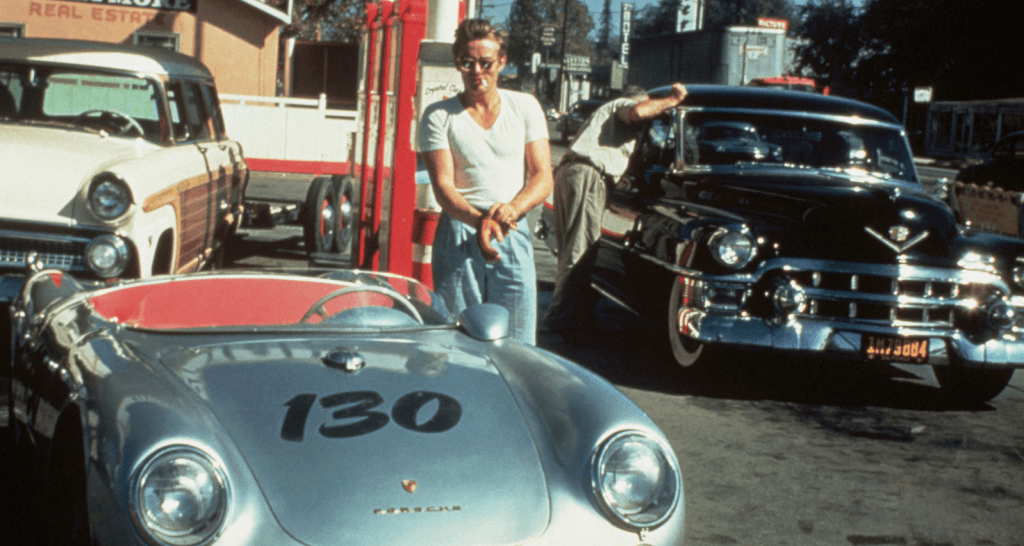
James Dean’s cursed Porsche.
Czytaj dalej →
07.07.2025
Jaguar’s history begins with the founding of the Swallow Sidecar Company in 1922, where the manufacture of motorcycle trailers and sidecars for motorcycles was accompanied by Sir William Lyons’ passion for innovation. This history of the jaguar brand shows how a brand created by enthusiasts quickly became synonymous with British elegance and speed.
In 1922, William Lyons and William Walmsley founded the Swallow Sidecar Company in Blackpool, initially producing motorcycle sidecars. Their precision workmanship and elegant design quickly earned them a reputation among motorcycle enthusiasts at the London Motor Show, allowing them to expand the plant and invest in research into lightweight aluminum structures.
After World War II, in 1945, the company was transformed into SS Cars Ltd, and back in 1945 Jaguar Cars decided to change its official name to Jaguar. The new brand referred to the speed, agility and elegance of the big cat, and the Jaguar logo, showing a three-dimensional profile of the animal, became a symbol of luxury cars.
Jaguar is a symbol of elegance and sporty power. The F-PACE SVR model offers a dynamic silhouette, top technology and performance that is truly impressive. Rent a car that embodies the brand’s success story.
View the Jaguar F-PACE SVR rental offer.In 1948, Jaguar unveiled the XK120, powered by a 3.4-liter inline six with 160 horsepower and a top speed of 120 mph. This first sports vehicle featured powerful engines and aerodynamic shapes, winning worldwide acclaim with its Brooklands speed records and reliable safety, confirming its position in the passenger car segment.
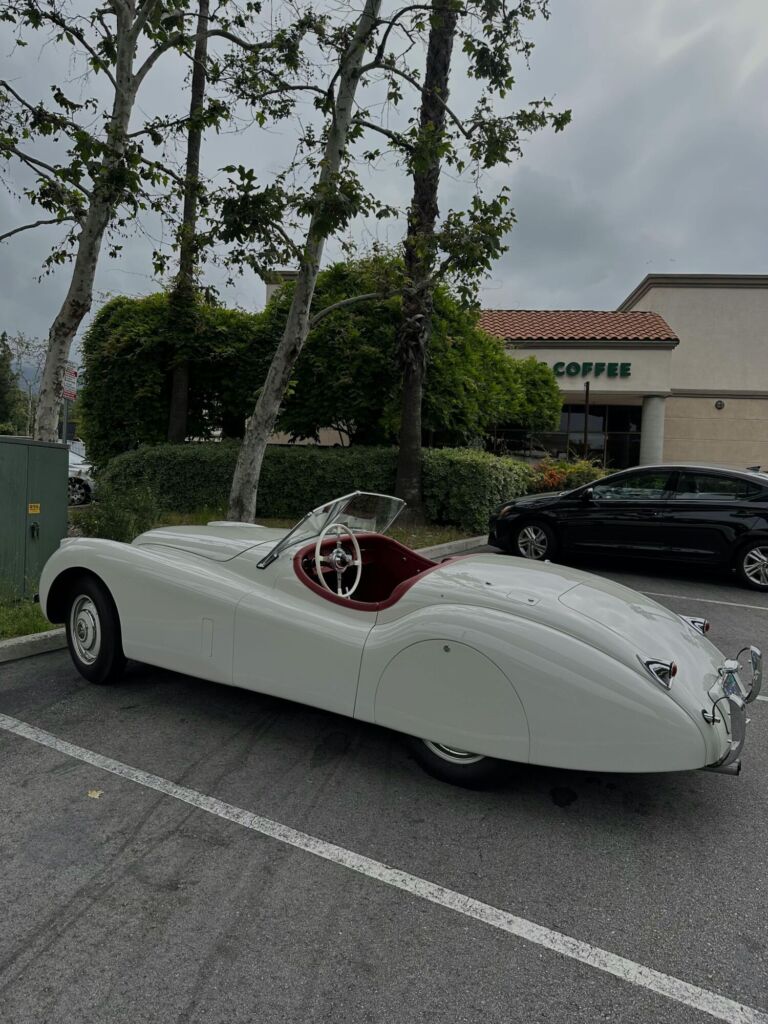
Between 1954 and 1961, further evolutions of the XK series appeared – the XK140 and XK150, offering improved suspension, increased engine power and a more comfortable interior. The new cars, produced in convertible and fastback versions and equipped with richer equipment, allowed Jaguar to maintain its leadership in the sports grand tourer segment.
In 1951, the Mark VII luxury cars were introduced, equipped with a 3.5-liter engine and automatic transmission. Subsequent versions of the Mark VIII and Mark IX (1958-1961) received larger brakes, air conditioning and electric windows, making them favorites of the British royal court.

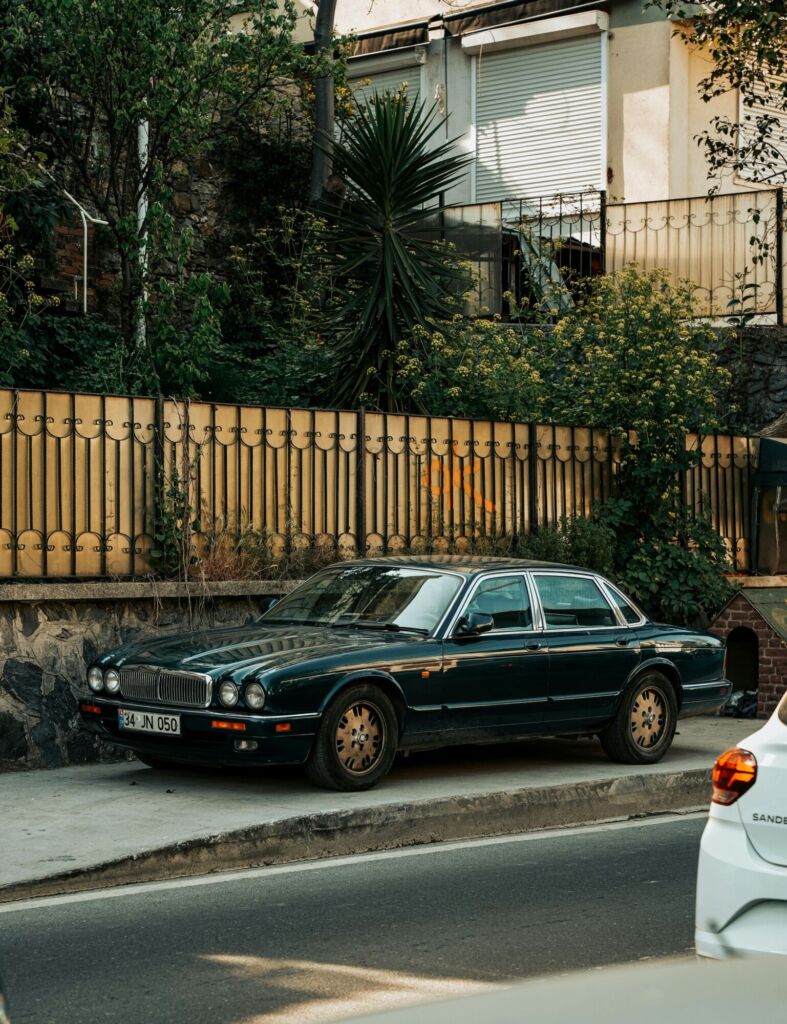
In 1968, Jaguar unveiled the sedan variant of the XJ model, a new-generation four-door sedan that combined classic elegance with innovative monocoque construction. The lightweight construction made it possible to manufacture aluminum bodies while producing mainly passenger cars, providing the driving comfort and dynamics characteristic of the brand.
Introduced in 1961, the Jaguar E Type quickly became an automotive icon thanks to its unparalleled price/performance ratio, reaching 0-100 km/h in 7 seconds. The sleek, streamlined body by Malcolm Sayer and strategic design gave the body an elegant type coupe silhouette, which confirmed the unique character of the e Type model.

In 1966, Jaguar merged with the British Motor Corporation to form British Motor Holdings. The merger was intended to consolidate the British automotive industry, but introduced a complicated management structure and numerous integration problems.
In 1968, British Motor Holdings merged with Leyland Motor Corporation, giving rise to the British Leyland Motor Corporation. Political decisions, strikes and outdated production lines contributed to a decline in quality and loss of competitiveness, which took a toll on the brand’s image in the 1970s.
In 1984, Jaguar was spun off from British Leyland and brought under the control of British Aerospace. The new owner invested in modernizing factories, introduced the latest technology and aerospace-style quality control systems, allowing the brand to regain some of its prestige.
In 1989, Ford Motor Company acquired Jaguar, integrating it into part of the Premier Automotive Group and forming a partnership with Daimler Motor Company. American capital allowed access to new technologies, platforms and global distribution networks.
Between 1998 and 2007, Ford introduced the jaguar S-Type and compact X-Type car models, and in 2007 unveiled the XF, a Jaguar-signed two-door middle-class limousine. This offering confirmed the strength of the jaguar cars brand in the luxury car segment.

In 2008, the Indian conglomerate Tata Motors acquired Jaguar along with Land Rover. The new owner significantly increased investment in R&D, the construction of modern factories in Halewood and Castle Bromwich, and the expansion of the global sales network.
Under Tata’s direction, Jaguar introduced the long-awaited new XJ (2010), an extreme lightweight sedan with an aluminum body, and in 2013 the sporty F-Type, which is the spiritual heir to the E-Type. Subsequent years saw the debut of the compact XE and second-generation XF, offering advanced multimedia and driver assistance systems. Jaguar’s latest model showed the direction of the brand’s development.
In 2018, Jaguar unveiled the I-PACE – the first all-electric SUV in the premium segment, equipped with two electric motors with a combined output of 400 horsepower, a 90 kWh battery pack and a range of more than 470 km. The model won the title of World Car of the Year, confirming the brand’s ability to transform in line with electromobility trends.

Jaguar continues to advance electrification with the unveiling of prototypes of the J-PACE, a larger mid-range SUV, and an electric version of the XJ EV, foreshadowing future luxury car series with zero-emission and autonomous driving systems.
Jaguar has decided to take a bold and unprecedented step – completely phasing out the production of combustion cars even before the release of the next generation of electric models. The brand had already announced that it would become fully electric by 2025, but it is only now that the real consequences of this decision are becoming apparent. Production of existing models has been extinguished, which has translated into a sharp drop in sales, especially in European markets. In April 2025 alone, sales fell by more than 97% – from nearly two thousand units to just a few dozen.
Contrary to appearances, this was not the result of a crisis or a misguided strategy. Jaguar consciously “cleaned up” its range, preparing the ground for new all-electric models. Such a decision, although risky in terms of image and sales in the short term, is aimed at strengthening the brand’s position in the ultra-premium segment – alongside brands such as Bentley and Aston Martin. It has already been announced that the first new model – a four-door electric GT – will be unveiled in late 2025 and will be offered in an extremely limited form.
Jaguar’s technological transformation is also accompanied by a complete image change. The brand has embarked on a rebranding based on the slogan “Copy Nothing” – clearly cutting itself off from its previous associations with “British-style luxury.” The logo was redesigned, visual communication was simplified, and the new ads do not show cars at all. Instead, they focus on abstract emotions, art and uniqueness.
Such actions have caused mixed reactions – many fans of the brand do not hide their surprise, and some even accuse the company of losing its identity. However, according to JLR (Jaguar Land Rover) representatives, this move is fully considered. The brand does not want to compete on price or technology with Tesla or BMW – instead, it wants to become a niche product, exclusive and consciously detached from the mass market. Each future Jaguar model is to be produced in a limited run and aimed at a select audience. This is Jaguar’s vision of an “electric Rolls-Royce of the future” – bold, risky, but also extremely ambitious.
Jaguar’s transformation is part of a broader plan by the JLR Group known as the “Reimagine” strategy. It’s a comprehensive concept to renew all of the group’s brands – with Jaguar at the forefront – with a focus on electromobility, sustainability and redefining luxury. For Jaguar, this means not only a change in propulsion, but above all a change in philosophy – the brand is to be not so much a manufacturer of cars, but a creator of emotional and unique experiences for selected customers.
As part of this strategy, Jaguar plans to release three all-new electric models – the first of which will be the aforementioned four-door GT, set to be launched in late 2025. The car is expected to have a range of more than 700 kilometers, acceleration from 0 to 100 km/h in about 3 seconds and a price tag of £100-150,000. Production will be limited, and orders will be made on a personalization basis straight out of the haute couture segment.
Jaguar does not intend to chase trends – it wants to create them. Among other things, it plans to work with artists, designers and art curators to ensure that each car is seen as a unique work of art. This is a definite departure from Jaguar’s previous position as a rival to Mercedes or Audi and a shift toward brands that build value on exclusivity and an authorial approach to product.

Jaguar’s new direction is stirring up extreme emotions. Some commentators praise the brand for its courage and consistency in its quest to be a unique electric car manufacturer with a soul. In their view, Jaguar has finally stopped trying to “catch up with the competition” and instead followed its own path – more difficult, but more consistent and far-reaching. The “less, but better” strategy can work, especially in an era of over-saturation in the automotive market and the growing importance of personalization.
However, many existing customers, especially those attached to classic diesel models, feel confused. The lack of new products in showrooms, the discontinuation of the popular F-TYPE and XF versions, and unusual visual communication have caused Jaguar’s sales to plummet in a short period of time – which may look like a crisis to the average consumer. Critics believe the brand was too quick to cut itself off from its history before showing the finished product of a new era.
Against the backdrop of growing competition from Tesla, Lucida, Porsche or even Chinese premium brands, Jaguar is betting on a different language of communication – subtle, refined and devoid of aggression. Will this way convince the market? It all depends on the quality of the new models, the consistency of the brand and the ability to build an aura of desire around it. The first reactions – such as more than 30,000 registrations for the new GT model – show that the demand for niche luxury still exists. The question is whether Jaguar will manage to turn this potential into long-term success.
Jaguar Racing has enjoyed considerable success in auto racing, winning three victories at the 24 Hours of Le Mans and building a reputation for producing reliable and fast race cars.
In the decades that followed, Jaguar participated in rallying and touring races, winning titles in the British Saloon Car Championship series and competing against top manufacturers on tracks in Europe and Australia.
Jaguar models have often appeared on movie screens – from the E-Type in “Death Comes Tomorrow” from the James Bond series to the contemporary XF and F-Type in action films. The distinctive body lines and elegant interior details have inspired fashion and architectural designers, and Jaguar has been the official Jaguar name for many productions.
Jaguar has a multitude of dedicated enthusiasts around the world, affiliated with clubs and associations that organize rallies, rallies of classics and auctions of vintage units. For collectors, car models such as the XK, E-Type and early SS sedans are not only objects of passion, but also investment objects.
The company, which later became Jaguar, was founded in 1922 by William Lyons and William Walmsley, initially producing motorcycle sidecars under the name Swallow Sidecar Company.
Jaguar is a symbol of speed, elegance and luxury, and its Jaguar name and iconic predatory cat logo refer to the agility and prestige that distinguish the British brand in the world.
After World War II, the brand changed its name from SS Cars to Jaguar, went through mergers with British Motor Corporation and British Leyland Motor Corporation years later, was owned by British Aerospace, then Ford Motor Company, and since 2008 has been owned by India’s Tata Motors as part of the Jaguar Land Rover group.
In 1989, the Jaguar brand was acquired by Ford Motor Company, and in 2008 it was bought out by Tata Motors, forming Jaguar Land Rover.
Jaguar’s history begins with the Swallow Sidecar Company founded in 1922, through the debut of the XK120 sports cars in 1948, the iconic Jaguar E Type, mergers within the British Motor Company, ownership by Ford, and now development under the wing of Tata Motors with an emphasis on electrification.
The Jaguar brand is owned by Jaguar Land Rover, which has been wholly owned by Tata Motors since 2008.
Engines for Jaguar models – both the iconic XK units and modern Ingenium units – are designed and manufactured at Jaguar Land Rover’s own plants in the UK.
Jaguar Cars Ltd was the formal name of the manufacturer after the restructuring from SS Cars Ltd, forming the basis for the development of the Jaguar brand in subsequent decades as part of the automotive group.
In 1966, Jaguar merged with the British Motor Corporation, which began a period of consolidation in the British automobile industry.
Jaguar becomes an independent brand in 1984 when it is spun off from British Leyland and transferred to the control of British Aerospace.
The Mark II limousine was a development of the Mark I luxury limousine, offering more engine power and an improved suspension for VIP comfort.
SS cars, or models produced before World War II by SS Cars Ltd, included luxury sedans and sports coupes, which later became the basis of Jaguar’s offerings.
The official car of the British royal court often chose the Mark VII and Mark VIII models, appreciating the reliability and representative character of these limousines.
The Jaguar E, also known as the Jaguar E-Type, is a legendary coupe model introduced in 1961, combining high speed, lightweight monocoque construction and unique design that continues to inspire designers today.
Jaguar is a symbol of elegance and sporty power. The F-PACE SVR model offers a dynamic silhouette, top technology and performance that is truly impressive. Rent a car that embodies the brand’s success story.
View the Jaguar F-PACE SVR rental offer.